Tuxera NTFS for Mac 2015 allows you to access, edit, transfer, store and delete files from your NTFS drives on the latest Apple operating system. It is backward compatible and runs on all OS X versions starting from Leopard. Tuxera NTFS for Mac 2015 delivers the fastest NTFS file transfer speeds while protecting your data with a smart caching layer. Link Download : https://goo.gl/Sdmt5R Serials: 8ENKW-3P40Y-X02NZ-Y6FYP 8WNQN-5640Q-N1AZK-U4AY6 8FT7M-7M40X-G3VXP-XT2YP 8DJQH-1P40X-Z1UNL-VM2LY 8YNQX-2640Y-XHCZP-TYFQU 8WXPT-0440Z-X0VXP-W57PA 8ZJ2T-2640M-QHU7Z-Z42ZA 8YT3H-1H40P-XH37L-W5FYP 8ZXKJ-7M40N-72KEL-URGL6
VMware Fusion 8.0.0 Final Release is similar to Parallels Desktop 11 and VirtualBox for Mac that lets the users install and run Windows and Linux on Macintosh machines. Use Microsoft or any other Linux distribution such as Ubuntu on Mac. For example, user can run Windows 10 or Windows 8 on Mac without any trouble. It lets you create virtual machine on your Intel processor computer including 32 bit and 64 bit systems. Link download: https://download3.vmware.com/software/fusion/file/VMware-Fusion-8.1.1-3771013.dmg License Key : ZY7TK-A3D4N-08EUZ-TQN5E-XG2TF
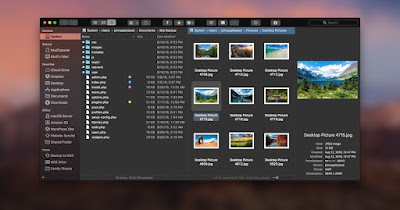
ForkLift 3.0.6 is a powerful file manager and ferociously fast FTP client clothed in a clean and versatile UI that offers the combination of absolute simplicity and raw power expected from a well-executed Mac software. ForkLift will connect to any remote server SFTP, FTP, WebDAV, Amazon S3, Rackspace CloudFiles, AFP, SMB, and NFS shares on your local network,- pretty much anything you can plug into or hook up to a Mac. ForkLift also carries a complete toolbox for managing your files, including Folder Synchronization, Batch Renaming, Archive handling, Application deleter, editing files over remote connections and many more. All these power features are packaged into a Finder-like, dual-pane interface that delivers superior workflow while remaining absolutely familiar to use, along with Quick Look, Spotlight search and all. Features Completely rewritten entirely in Swift ForkLift Mini Two-way Sync Preview Quick Open Multi Rename Dark Mode Du...
Tuxera NTFS for Mac 2016 (Support for macOS 10.12 Sierra) allows you to access, edit, transfer, store and delete files from your NTFS drives on the latest Apple operating system. It is backward compatible and runs on all OS X versions starting from Leopard. Tuxera NTFS for Mac 2016 delivers the fastest NTFS file transfer speeds while protecting your data with a smart caching layer. Link Download : https://goo.gl/TXWKsL If you could help me to earn a bit of money, please download here: http://ouo.io/WHCk2A Serials: 8GNQX-7440M-Z1LXQ-YZ3PY 8X1QJ-0640Y-71K7Q-ZDGYK 8X96X-4P40W-71LEY-RGAP6 8F5QX-1440Y-5HKGK-TE2YP CleanMyMac 4.0.4 cracked for macOS Mojave v10.14 https://trick-mac.blogspot.com/2018/10/cleanmymac-404-cracked-for-macos-mojave.html
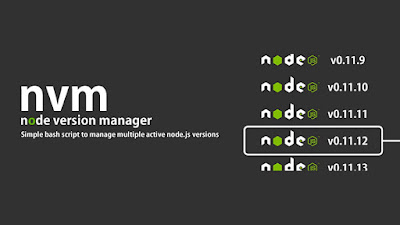
If you work on multiple Node.js projects, you’ve probably run into this one time or another. You have the latest and greatest version of Node.js installed, and the project you’re about to work on requires an older version. In those situations, the Node Version Manager (nvm) has your back, allowing you to install multiple versions of Node.js and switch between them as you see fit. Getting started To get started, you will need to install the Node Version Manager, or nvm on your system. It is included by many package managers, or you can install it manually by running one of the following: # If you have `curl` installed: $ curl -o- https://raw.githubusercontent.com/nvm-sh/nvm/v0.34.0/install.sh | bash # Or if you prefer `wget`: $ wget -qO- https://raw.githubusercontent.com/nvm-sh/nvm/v0.34.0/install.sh | bash Copy Once installed, you will also need to add a couple of lines to your shell’s startup file ( .bashrc , .bash_profile , .zshrc , et cetera):...
- Goto ~/.subversion/auth/svn.simple - Find and delete the config file which contains my svn site. - Add the following to the [auth] section of ~/.subversion/config file: [auth] password-stores= - Then run the following in Terminal in your project's catalog: svn up Now you can restart your VS Code and it should not request for SVN username/password.
DaisyDisk allows you to visualize your disk usage and free up disk space by quickly finding and deleting big unused files. DaisyDisk helps you recover disk space by finding and removing large useless files The program scans your disk and displays its content as a sector diagram where the biggest files and folders at once become obvious. To drill down to a folder, just click on a segment. To bubble up, click in the center. Move the mouse over the diagram and see the name and path of each file, and enclosed files (if any). Hit Space to quickly preview file content, without launching another application. In this way, walk around your disk and drag-and-drop all unneeded files into the "collector". Expand the collector to check its contents. When done, clean it up with a single click. How to install DaisyDisk 4.6.5 on macOS Mojave v10.14 ( full cracked) 1.Link Download : https://goo.gl/gPnQ5N If you could help me to earn a bit of money, ple...



How To Stop Your Cursor From Getting Bigger >>>>> Download Now
ReplyDelete>>>>> Download Full
How To Stop Your Cursor From Getting Bigger >>>>> Download LINK
>>>>> Download Now
How To Stop Your Cursor From Getting Bigger >>>>> Download Full
>>>>> Download LINK